
How to Start Content Creation & Build Your Brand
CREATOR GUIDE · BRAND STRATEGY · GETTING STARTED
Stepping Into the World of Content Creation: Your Guide to Building a Brand That Lasts
The freedom, the opportunities, the hard parts—and a realistic roadmap from your first idea to a recognizable creative brand.
Maybe you’ve been thinking about starting a YouTube channel. Maybe you want to share your music, build a design portfolio, document your journey, or turn a skill into a business. The internet makes it possible to reach people you might never meet otherwise. But building an audience—and a brand people trust—is different from simply posting content.
This guide covers both sides: the exciting opportunities and the unglamorous work that makes them possible. You’ll leave with a clear starting point, practical tools, and a 30-day plan you can actually follow.
Why Step Into Content Creation?
Content creation isn’t limited to influencers. Teachers publish explainers. Musicians share production breakdowns. Designers show before-and-after transformations. Local businesses tell customer stories. A creator is simply someone who consistently makes useful, interesting, or entertaining things for a specific audience.
The best reason to start isn’t that a video might go viral. It’s that publishing gives your ideas a place to live—and gives other people a way to discover what you can do.
Six Benefits Worth Getting Excited About
1. Creative freedom
You choose the subject, voice, format, and point of view. Whether you’re filming, writing, recording, or designing, you can develop a style that feels unmistakably yours.
2. A portfolio that works while you’re offline
A thoughtful tutorial, case study, or video can introduce your work to someone months after you publish it. Unlike a fleeting introduction, your best work can keep demonstrating your expertise.
3. Community and meaningful connections
Comments, conversations, collaborations, and shared interests can turn strangers into peers, customers, and friends. The strongest communities form around a shared interest—not just a follower count.
4. Transferable skills
You’ll practice storytelling, research, photography, editing, design, communication, and analytics. Even if your creator business changes direction, those skills remain valuable.
5. New business opportunities
Possible revenue streams include client services, sponsorships, affiliate links, digital products, memberships, courses, and platform monetization. None are automatic; each depends on audience fit, trust, and consistent value.
6. Ownership of your creative identity
When you define what you stand for, you become more than an account on an app. A website, mailing list, and body of work help make your brand portable across platforms.
The Cons, Hurdles, and Reality Checks
It’s easy to see polished creator success stories and miss the months of work behind them. Here’s what deserves a place in your plan.
Slow and unpredictable growth
Some excellent posts receive little attention. Audience growth is uneven, and reach can change without warning. What helps: measure learning and consistency before follower totals; review performance in monthly batches instead of judging each post in isolation.
Time and energy demands
Research, scripting, recording, editing, captions, publishing, and community replies can become a second job. What helps: batch similar tasks, reuse footage responsibly, and create a repeatable production checklist.
Comparison and creative burnout
Constantly watching other creators can make your own progress feel invisible. What helps: choose a sustainable cadence, protect time offline, and keep a folder of your own improvements.
Money isn’t guaranteed
Equipment, software, hosting, and production time may cost money before you earn any. What helps: start with what you have, track costs, and test demand before buying expensive gear.
Privacy, criticism, and ownership
Publishing publicly invites feedback, including unhelpful criticism. It also raises questions about location sharing, music licenses, permissions, and copyright. What helps: set personal boundaries, secure accounts, get releases when appropriate, and use material you own or have permission to publish.
Platform dependence
Formats, discovery features, and monetization rules change. What helps: keep copies of your work, build an email list with consent, and maintain a home base you control.
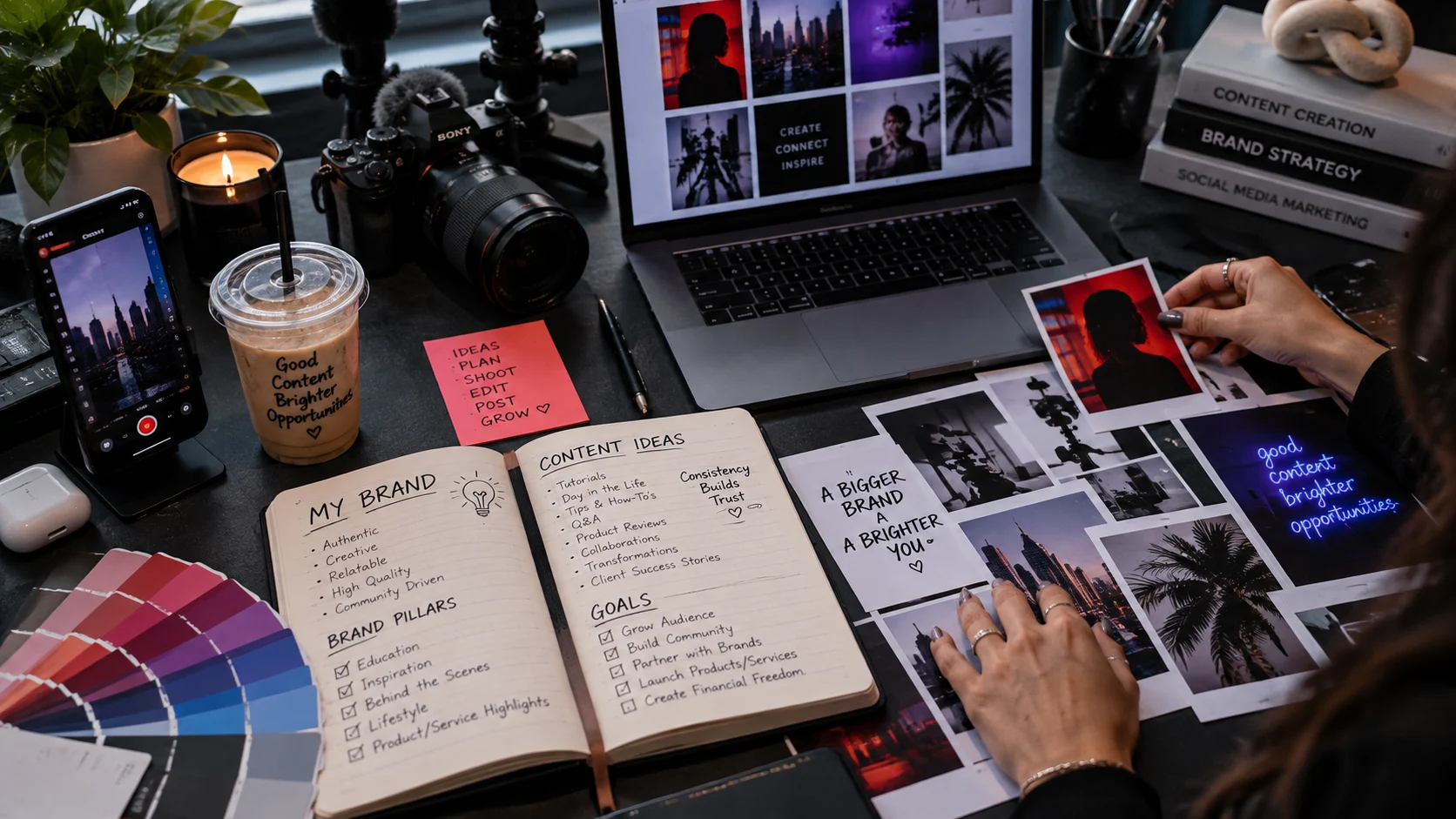
Before You Post: Understand What a Brand Really Is
A logo is a visual symbol. A brand is the impression people develop after experiencing your work repeatedly. It’s the topics you cover, the promises you keep, the way you speak, and the quality they can expect.
Try finishing this sentence: “I help [specific audience] achieve [specific outcome] through [my unique approach].”
For example: “I help independent musicians make better home recordings through practical, budget-conscious production tutorials.” That statement is more useful than “I post music stuff.” It tells you what to create—and tells the right people why they should care.
Your Nine-Step Roadmap to Building a Creator Brand
Step 1 — Choose your audience and focus
Start with a person and a problem, not a platform. Are you helping beginner photographers shoot better portraits? Showing artists how to release music independently? Documenting budget-friendly home renovations? Specificity makes your work easier to recognize.
Step 2 — Write a simple brand promise
Define what viewers can reliably get from you. Keep it short, useful, and believable. You can evolve it later.
Step 3 — Choose three content pillars
Content pillars are repeatable themes. A music-production creator might choose recording tutorials, gear breakdowns, and behind-the-scenes sessions. These guide ideas without trapping you in a rigid formula.
Step 4 — Develop a visual identity
Pick a small color palette, a readable font system, a photo style, and consistent thumbnail rules. Your visuals should support the story, not distract from it. A simple system used consistently beats an elaborate identity applied randomly.
Step 5 — Select one main platform and one home base
Choose the format that fits your strengths: video on YouTube, short clips on Instagram or TikTok, articles on your website, or audio in a podcast. Your website or email list can serve as your home base. Avoid trying to master every platform on day one.
Step 6 — Create a repeatable production workflow
Build a simple pipeline: idea → outline → record or draft → edit → review → publish → repurpose → learn. Save templates for captions, thumbnails, and publishing checklists.
Step 7 — Publish a small starter collection
Instead of launching with one lonely post, plan five to eight pieces that demonstrate your core topics. Example: an introduction, a beginner guide, a myth-busting post, a behind-the-scenes piece, and a practical checklist.
Step 8 — Connect, listen, and improve
Answer genuine questions. Notice which topics generate thoughtful replies, saves, or repeat visits. Collaboration often works better when you offer something valuable before asking for exposure.
Step 9 — Explore monetization only when there’s a fit
Start with an offer connected to your audience’s needs. A designer might sell templates; a producer might offer presets; a filmmaker might book client projects. Disclose sponsorships and affiliate relationships clearly.
What You Can Learn From Real Creators
Marques Brownlee — a clear subject, carefully executed
Marques Brownlee (MKBHD) is a useful example of recognizable positioning around consumer technology. The lesson isn’t that you need expensive production equipment; it’s that clarity, strong communication, and a recognizable editorial standard can become part of the brand.
Ali Abdaal — teaching as a content engine
Ali Abdaal illustrates how educational content can extend into resources and products. The takeaway: solve recurring audience problems and organize what you learn into helpful formats.
Pat Flynn — trust through useful instruction
Smart Passive Income offers an example of content focused on entrepreneurship education and community. The takeaway: practical resources and clear explanations can give people reasons to return.
These are examples of approaches, not promises of similar results. Your path will depend on your skills, audience, market, and persistence.
A Beginner-Friendly Creator Toolkit
- Planning: Notion or a spreadsheet for ideas, scripts, and publishing dates.
- Design: Canva for thumbnails, graphics, and simple brand assets.
- Video editing: DaVinci Resolve for editing and color work; CapCut for quick social videos.
- Audio: Audacity for basic audio editing.
- Publishing: WordPress for a website you can customize and expand.
- Learning: YouTube Creators and Google’s SEO Starter Guide.
- Disclosure guidance: FTC Disclosures 101 for sponsored content and endorsements.
Free plans and product features change, so verify current terms before committing to a tool.
Your First 30 Days: A Practical Launch Plan
Week 1: Find your direction
Write your audience statement, brand promise, and three content pillars. Research ten questions your audience asks.
Week 2: Build the foundation
Choose your primary channel, secure a consistent handle where available, create simple visual templates, and outline five pieces.
Week 3: Make and publish
Produce three useful pieces, publish them on a manageable schedule, and invite specific feedback.
Week 4: Review and refine
Look at retention, saves, replies, site visits, and questions. Identify one improvement to make next month.
Sample starter calendar: Monday—short tip; Wednesday—behind the scenes; Friday—deeper tutorial or story. This is an example, not a required posting frequency.
Frequently Asked Questions
Do I need expensive equipment to start?
No. A phone, decent light, clear sound, and a useful idea are enough to begin. Upgrade only when you understand what limits your work.
How long does it take to grow an audience?
There is no reliable universal timeline. Treat your first months as experimentation and skill-building, not a guaranteed race to a follower milestone.
Should I be on every social platform?
Usually not at first. Start with one primary channel that suits your format, then repurpose thoughtfully when you have a repeatable workflow.
Do I need to show my face?
No. Screen recordings, voiceovers, written tutorials, product demonstrations, illustrations, and hands-only videos can all work if the content serves its audience.
Can I make money without a huge following?
Potentially. A small audience with a clear need may support services or specialized products. Revenue is not guaranteed, and trust matters more than inflated follower numbers.
What’s the single most important first step?
Choose who you want to help and what you’ll help them do. That decision shapes your content, tone, visuals, and platform choices.
Start Before You Feel Ready
You don’t need a perfect logo, a studio full of equipment, or a year’s worth of ideas. You need a direction, a willingness to learn, and the courage to make the first useful thing. Build the habit. Pay attention. Improve the work. Let your brand grow from what you consistently deliver.
CREATE. CAPTURE. ELEVATE.
Explore more creative strategy, production, and digital-branding resources from MILEYM3DIA.